


The Slav starts 1.d4 d5 2.c4 c6. When Black adds …e6 and …Nf6, it becomes the Semi-Slav, with its own large body of theory: the Meran, the Moscow and the Botvinnik. Most books choose one or the other, so the first decision is which of the two you want to play.
If you are new to the Slav
Starting Out: Slav & Semi-Slav
Glenn Flear (Everyman Chess, 2005). An introduction to both, with chapters on the main-line Slav, the gambit lines, the Exchange, the Chebanenko (4…a6), and the Semi-Slav’s Botvinnik, Moscow and Meran. The publisher pitches it at improving players. The ideas still hold up; the concrete theory is twenty years old.
A repertoire for Black
Cyrus Lakdawala (Everyman Chess, 2022). A complete Black repertoire against 1.d4 based on the main-line Slav, 4…dxc4 5.a4 Bf5. Against 6.Ne5 Black returns the pawn with 6…Nbd7, against the Geller Gambit the book suggests 7…h6!?, and against the Reti Black takes on c4 and tries to keep the pawn. 448 pages in a question-and-answer style built around annotated games. Lakdawala describes the repertoire as a touch more aggressive than his 2011 Slav book.
There is a 16-page sample on the product page.
Milos Pavlovic (Thinkers Publishing, 2024). A Semi-Slav repertoire, reached by the …e6 move order rather than through the Slav. It covers the Meran and the Anti-Meran (6.Qc2), the Marshall Gambit, 5.Bg5, the Catalan setups with g3, and 5.Qb3 and 5.Qd3. Worth knowing before you buy: it deliberately leaves out the Botvinnik and offers a different answer to 5.Bg5 instead. 176 pages, hardcover.
There is a 16-page sample on the product page.
Triangle System: Noteboom, Marshall Gambit and other Semi-Slav lines
Ruslan Scherbakov (Everyman Chess, 2012). A Black repertoire built on the Triangle, …c6 and …e6 before …Nf6, with the Noteboom as its sharpest weapon, and answers to the Marshall Gambit, the Exchange, and the Catalan setups. A narrower and more combative choice than the main Semi-Slav, and the analysis is from 2012.
Reference books
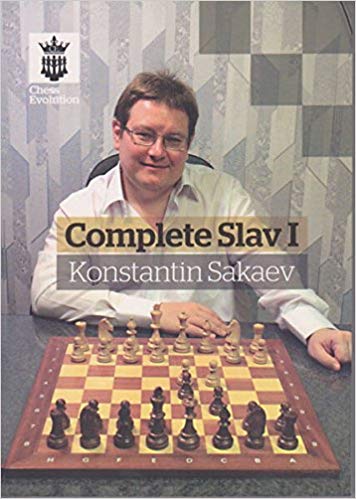
Konstantin Sakaev (Chess Evolution, 2012). Written as a neutral reference by a grandmaster who played the Slav with both colors: terse, with symbols rather than prose, aimed at strong players, and current to July 2012. Volume I covers the Exchange, the Noteboom side lines, the Marshall Gambit, the Chebanenko and 4.e3 lines. The main lines and the Semi-Slav are in Volume II, which we do not stock.
There is a 12-page sample on the product page.
Chess Explained: The Main-Line Slav
David Vigorito (Gambit, 2009). A short book (112 pages) on the main-line Slav after 4…dxc4, explaining the ideas for both sides. More than two thirds of it is on 5…Bf5, with particular attention to 6.Ne5. John Watson praised its completeness and its original analysis. Like any 2009 book, read the theory with an engine beside you.
There is a 7-page sample on the product page.
Playing against the Slav
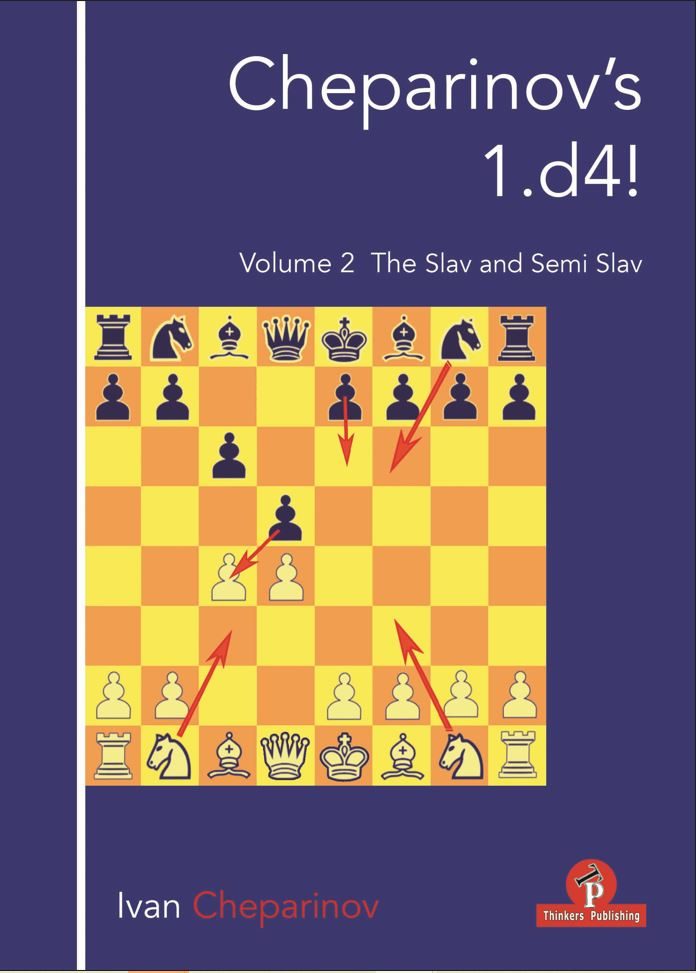
Cheparinov’s 1.d4! Volume 2: The Slav & Semi-Slav
Ivan Cheparinov (Thinkers Publishing, 2022). A White repertoire against both, with 3.Nf3 and 4.Nc3. It covers the Noteboom, the Chebanenko, the main-line Slav with 6.Ne5, and the Semi-Slav after 5.Bg5, including the Cambridge Springs, the Botvinnik and the Moscow. The author says openly that he does not promise an advantage in every line. Volume 1 of the series covers the King’s Indian and Grunfeld.
There is a 16-page sample on the product page.
Bf4 in the Queen’s Gambit and the Exchange Slav
Alexey Dreev (Chess Stars, 2016). A quieter White approach: the Exchange Slav with 4.Bf4, which Dreev presents as a low-risk way to play for a small edge while avoiding the main Slav, the Meran and the Moscow. Note that most of the book, roughly pages 82 to 238 of 288, is about Bf4 lines in the Queen’s Gambit Declined. It suits a 1.d4 player who wants both.
There is a 9-page sample on the product page.
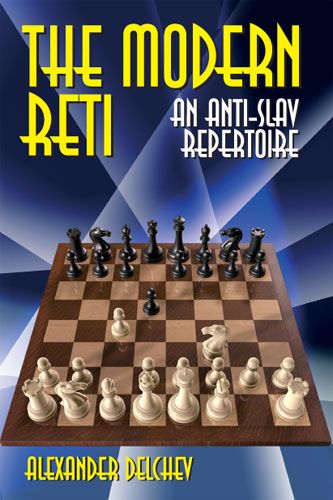
The Modern Reti: An Anti-Slav Repertoire
Alexander Delchev (Chess Stars, 2012). Avoids the Slav altogether: 1.Nf3 d5 2.c4, and against 2…c6, 3.e3 without an early d4, with a kingside attack built on Rg1 and g4 against the Meran-style setups. Delchev built the repertoire for a top professional, Antoaneta Stefanova, and most of it rests on his own analysis. From 2012, so check the critical lines.
There is a 16-page sample on the product page.