


In the Grünfeld, 1.d4 Nf6 2.c4 g6 3.Nc3 d5, Black lets White build a big pawn center and then attacks it. White’s main replies are the Exchange Variation (4.cxd5), the Russian System with Qb3, the bishop moves 4.Bf4 and 4.Bg5, and the Fianchetto with g3. There is also 3.f3, which avoids those main lines and prepares e4, and which has books of its own.
Grünfeld books differ less in which lines they cover than in temperament: how much risk the author is prepared to take with Black, and how much theory he expects you to carry.
Learning the ideas
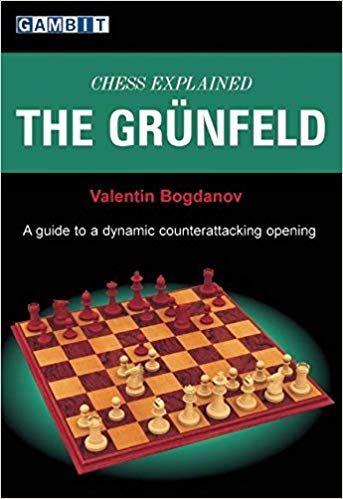
Valentin Bogdanov (Gambit, 2009). A short book, 128 pages, that explains the plans for both sides through 25 annotated games, covering the Exchange, the Russian System, the Bf4 and Bg5 lines, the closed e3 systems and the Fianchetto. It includes a contribution from Viacheslav Eingorn, whom Bogdanov has seconded for decades, on the Exchange main line with Rb1. Carsten Hansen recommended it ahead of other Grünfeld books for players rated under 2000. The theory is from 2009, but theory is not what this book is for.
There is a 6-page sample on the product page.

Jacob Aagaard (Everyman Chess, 2004). An introduction to the strategies, ideas and tactics for both sides, aimed at improving players, in 176 pages. It is more than twenty years old, so treat it as a first look at the opening rather than a source of current lines.
A repertoire for Black
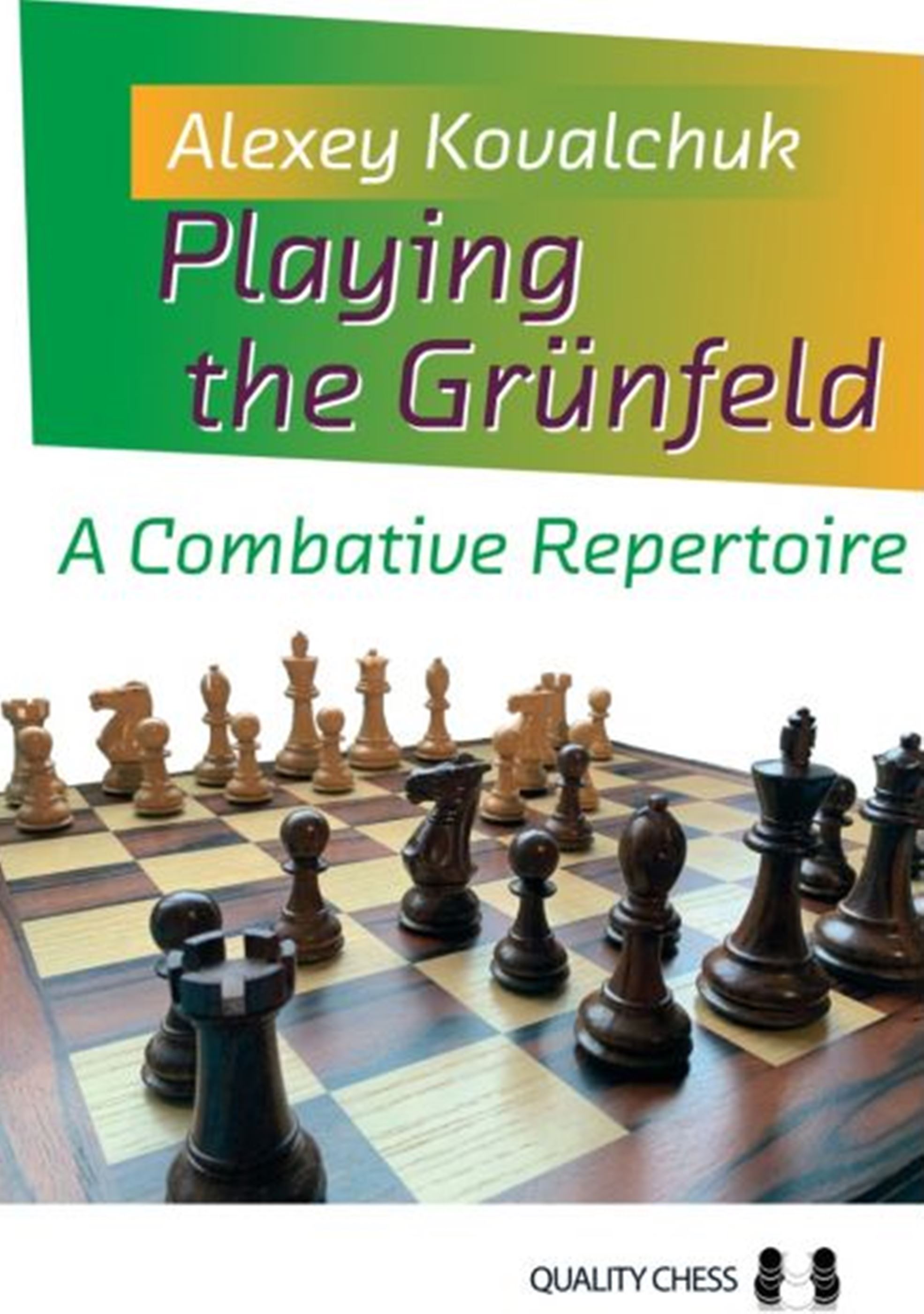
Playing the Grünfeld: A Combative Repertoire
Alexey Kovalchuk (Quality Chess, 2020). A complete repertoire in 504 pages that steers away from early forced draws and from lines where Black’s king comes under early attack. Against the Exchange with 7.Bc4 it plays 7…c5 8.Ne2 Nc6 9.Be3 0-0 10.0-0 b6, against the Russian System 7…a6, against the Fianchetto …c6 and …d5, and against 3.f3 3…c5. John Donaldson described its approach as mainstream, toning down Black’s play where that is warranted. It has a full variation index.
There is a 16-page sample on the product page.
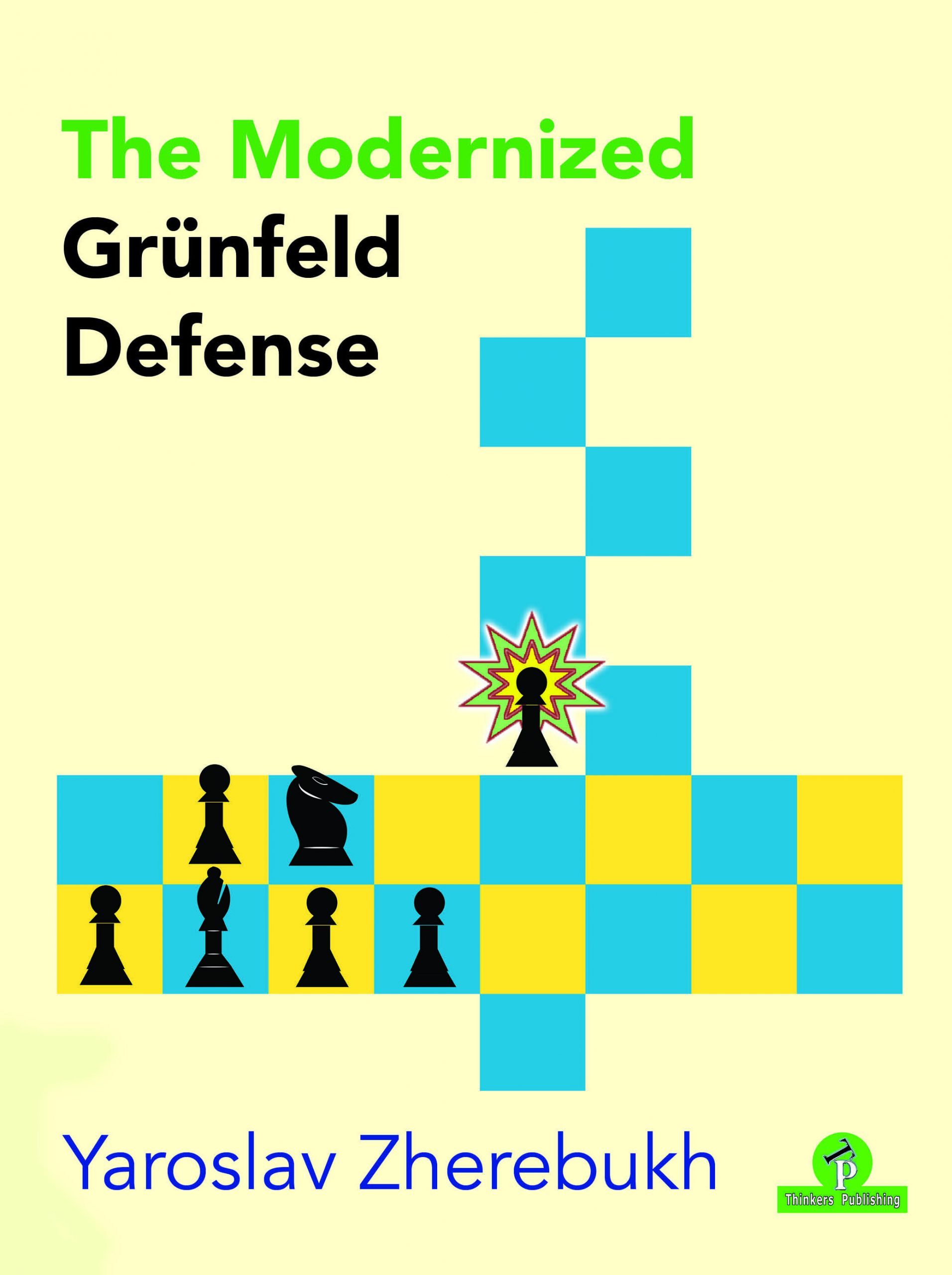
The Modernized Grünfeld Defense
Yaroslav Zherebukh (Thinkers Publishing, 2020). A repertoire by a grandmaster rated over 2600 who plays the Grünfeld himself, with theory current to January 2020. Its 16 chapters cover every main White system, including 3.f3 and the Fianchetto, plus three chapters for when White avoids the Grünfeld with 1.c4 or 1.Nf3. Donaldson described it as aggressive, often choosing lesser-known systems with material sacrifices and new ideas throughout. It has no index. If Kovalchuk is the steadier choice, this is the riskier one.
There is a 16-page sample on the product page.

Alexander Delchev (Chess Stars, 2019). A complete new edition of his 2011 book, with the lines rechecked, several recommendations changed and the anti-Grünfeld chapters largely new. It goes beyond 3.Nc3, with chapters on the English and on queen’s pawn systems such as the Trompowsky, so it also covers White’s main ways of avoiding the Grünfeld. Against 3.f3 it offers two options, 3…d5 and 3…Nc6. Each chapter has an overview of the main ideas, the theory step by step, and complete annotated games.
There is a 13-page sample on the product page.
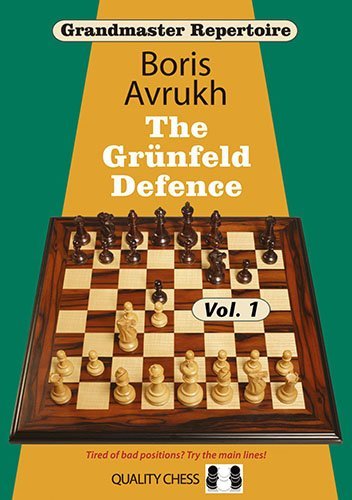
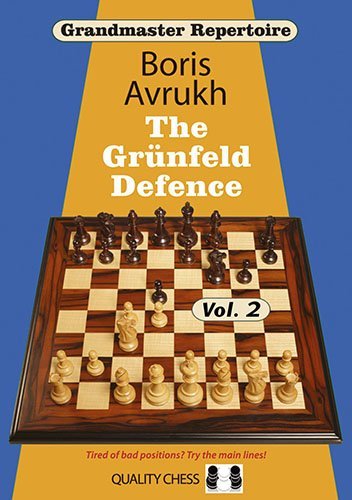
Grandmaster Repertoire 8 and 9: The Grünfeld Defence
Boris Avrukh (Quality Chess, 2011). The heavyweight option, over 600 pages in two volumes. Volume 8 covers everything except the Exchange: the Fianchetto, the Russian System (with 7…Nc6), 4.Bf4, 4.Bg5, 3.f3 and the rest. Volume 9 is the Exchange Variation alone, including the pawn grab with …Qxa2 in the 8.Rb1 line. Carsten Hansen rated it very highly but said it is for strong to elite players, and Sean Marsh warned that club players may be a little out of their depth. It is also from 2011.
There is a 9-page sample on the product page.
Pavlovic’s two books are different books

Unknown Weapons in the Grünfeld (2nd edition, 2024)
Milos Pavlovic (Thinkers Publishing). Despite the title, the 2024 edition is about current main lines rather than forgotten ones, as Pavlovic says in his preface. Half of its 14 chapters are on the Exchange Variation, and the rest cover the Russian System, 4.Bf4, Bg5 ideas, 5.h4, 4.e3 and 3.f3. It has no chapter on the Fianchetto, so a Fianchetto player will need another source.
There is a 16-page sample on the product page.

Unknown Weapons in the Grünfeld (1st edition, 2016)
Milos Pavlovic (Thinkers Publishing). The original book was the one about forgotten and rarely played lines, for example meeting 3.f3 with 3…Nc6. A German correspondence-chess reviewer found it mostly variations with little explanation, best for advanced players who already know the Grünfeld and want surprise value. It also has no Fianchetto chapter. Buy this one for the offbeat ideas, not as a newer or older version of the 2024 book.
There is a 16-page sample on the product page.
Playing against the Grünfeld
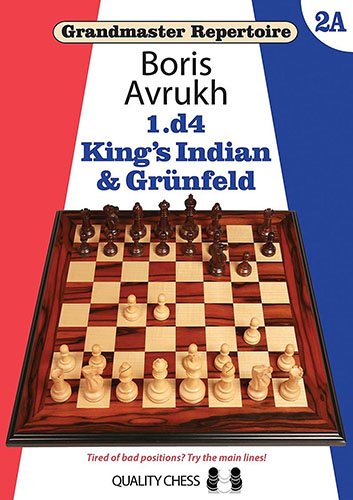
Grandmaster Repertoire 2A: King’s Indian and Grünfeld
Boris Avrukh (Quality Chess, 2018). A White repertoire against both openings based on the Fianchetto, g3. Against the solid …c6 and …d5 setup it recommends 5.Qa4!?, to stop Black recapturing on d5 with a pawn. Note that most of the book is about the King’s Indian, and that it is one of four volumes revising Avrukh’s 1.d4 repertoire. A Chess Life reviewer judged it best suited to experts and above.
There is a 15-page sample on the product page.

Larry Kaufman (New in Chess, 2014). A White repertoire based on 3.f3, which prepares e4 and covers the King’s Indian, as a Sämisch, at the same time. Against the Grünfeld proper the main line runs 3…d5 4.cxd5 Nxd5 5.e4 Nb6 6.Nc3 Bg7 7.Be3 0-0 8.Qd2 Nc6 9.0-0-0. The analysis is engine-checked, with numerical evaluations in the text alongside verbal explanation. 176 pages.
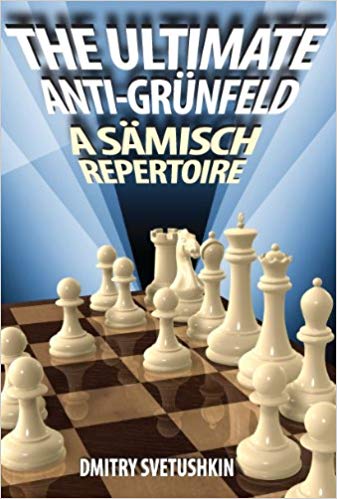
The Ultimate Anti-Grünfeld: A Sämisch Repertoire
Dmitry Svetushkin (Chess Stars, 2013). The same 3.f3 idea, and as Kaufman himself acknowledges, Svetushkin’s book came first. It covers 3…d5, 3…Nc6, Benoni and Volga-style replies, and against the King’s Indian a full Sämisch repertoire. The author stresses plans over memorization. If you choose 3.f3, you need only one of these two books.
There is a 7-page sample on the product page.
One note for Grünfeld players: every Black repertoire above has an answer to 3.f3, so these two White books are not a reason to avoid the opening.