


Against 1.e4 the four most common replies are 1…e5, the Sicilian (1…c5), the French (1…e6) and the Caro-Kann (1…c6). This page sets out how they differ, and covers the books for 1…e5 and for the smaller defenses that have no guide of their own.
How much does White get to choose?
One practical difference between the defenses is how much of the opening White decides. After 1…e5, White has a wide choice. The main lines are the Ruy Lopez, the Italian and the Scotch, but White can also play the Vienna (2.Nc3), the Center Game (2.d4), the King’s Gambit (2.f4) and others, and a 1…e5 player needs an answer to each. After 1…e6 or 1…c6, White usually plays 2.d4, and after 2…d5 the main choices are a handful of systems, such as the Advance, the Exchange or 3.Nc3, each with a recognizable pawn structure. The Sicilian’s main lines carry a great deal of theory, and White can also sidestep them with the Anti-Sicilians.
Meeting 1.e4 with 1…e5
The Ruy Lopez is usually considered the most testing reply to 1…e5, and Black’s defenses there have their own guide. Each book below sets out a repertoire for Black after 1.e4 e5.
A Complete Repertoire for Black after 1.e4 e5!
Yuriy Krykun (Thinkers Publishing, 2020, 280 pages). A repertoire against White’s main tries after 1.e4 e5, mostly with 2…Nc6: the King’s Gambit, the Vienna, the Bishop’s Opening, the Scotch, the Italian, the Four Knights and the Ruy Lopez, where it plays the Open Spanish. Reviewing it for British Chess News, Colin Lyne found “a lot of interesting and thought provoking lines that may surprise the player of the White pieces,” though he was not fully convinced by one line in the Open Spanish, 6.d4 Be7. Covering all of that in 280 pages means less depth than a specialist book.
There is a 15-page sample on the product page.
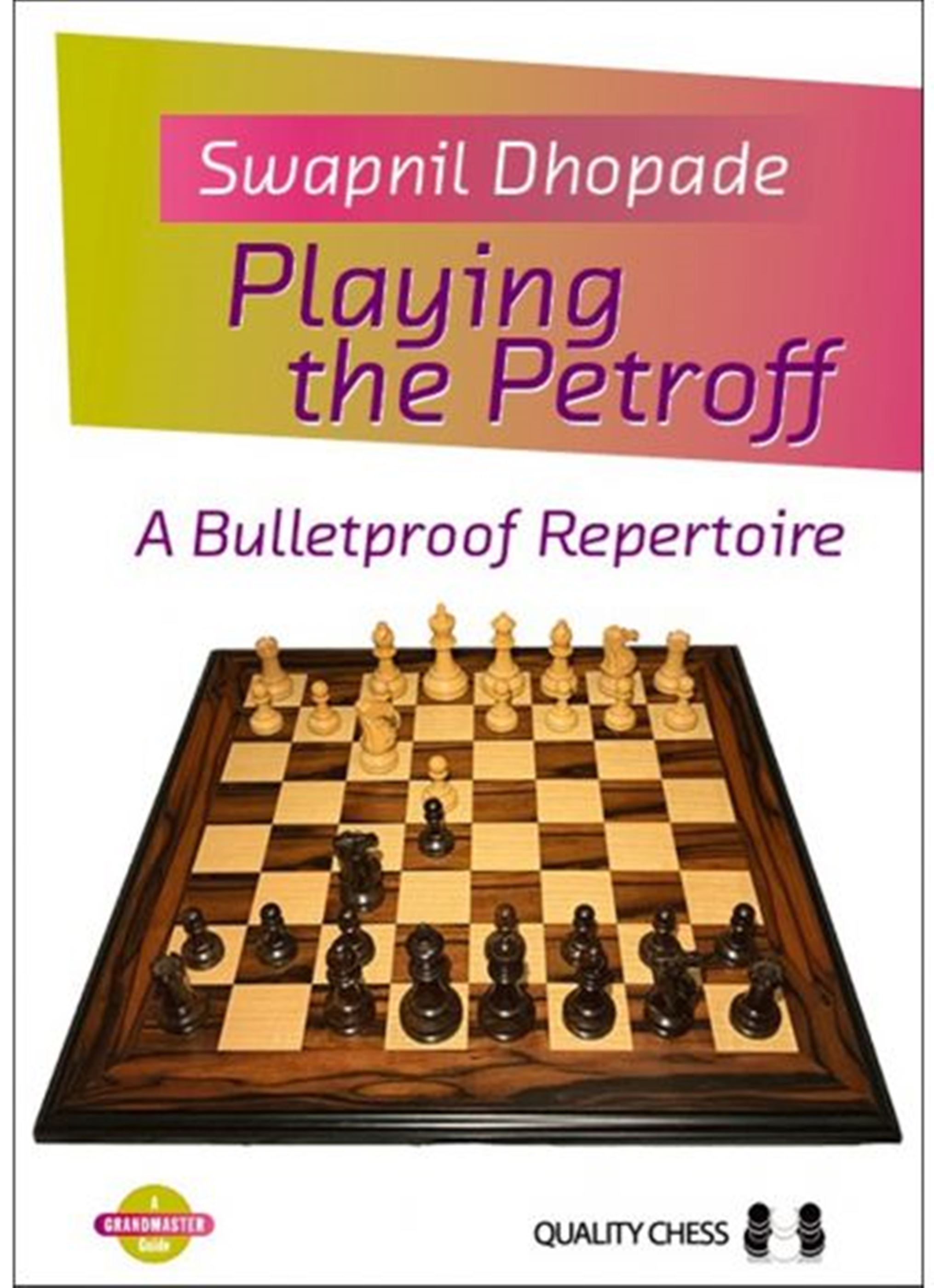
Swapnil Dhopade (Quality Chess, 2020, 328 pages). The Petroff, 2.Nf3 Nf6, takes a different approach: by answering 2.Nf3 with 2…Nf6 instead of 2…Nc6, Black avoids the Ruy Lopez, the Italian and the Scotch. The book covers 3.Nc3, 3.d4 and the main lines after 3.Nxe5, 5.d4 and 5.Nc3, then the King’s Gambit, the Vienna, the Bishop’s Opening and the Center Game. Dirk Schuh, reviewing in German, thought the reader needed to be a fairly strong club player and would often have to check open questions with an engine.
There is a 15-page sample on the product page.
The Sicilian, the French and the Caro-Kann
- The Sicilian: the most popular answer to 1.e4, with some of the heaviest theory. A Sicilian repertoire usually takes two books, one for your variation and one for the Anti-Sicilians. The Najdorf has its own guide.
- The French: much of the work is one choice against 3.Nc3, such as the Winawer or the Classical, plus answers to 3.Nd2, the Advance and the Exchange.
- The Caro-Kann: a similar idea to the French, but Black can develop the light-squared bishop before playing …e6, so it is less likely to be shut in.
The smaller defenses
These are rarer at the top level, and the theory is usually thinner, though the Alekhine book below runs to 543 pages.
The Modernized Alekhine Defense
Christian Bauer (Thinkers Publishing, 2021, 543 pages). The Alekhine, 1…Nf6, invites White to chase the knight with pawns and build a big center, which Black then attacks. Bauer covers the main lines (the Four Pawns Attack, the Exchange Variation and the Modern 4.Nf3), often with more than one option for Black. Reviewers split on it. John Donaldson wrote in US Chess that “if you play the Alekhine you must have this book.” Dirk Schuh found it neither a true repertoire nor a concise overview. It suits a reader who wants a reference and is willing to choose their own lines.
There is a 16-page sample on the product page.

The Safest Scandinavian Reloaded
Vassilios Kotronias (Chess Stars, 2023, 300 pages). The Scandinavian, 1…d5: after 2.exd5 Qxd5 3.Nc3 the book recommends 3…Qd6 and nothing else, so a player who prefers 3…Qa5 needs a different book. It is a completely revised edition of Kotronias’s 2016 book. For the same line with more explanation and less analysis, Scandinavian: Move by Move by Cyrus Lakdawala (Everyman Chess, 2013, 400 pages) is older but was praised by Sean Marsh for its “down to earth explanations.”
There is a 16-page sample on the product page.

Daniel Fernandez (Thinkers Publishing, 2020, 376 pages). A repertoire with 1…g6 and 2…Bg7. Fernandez admits where White keeps an advantage instead of claiming equality everywhere, and Uwe Bekemann, reviewing for the German correspondence chess federation, called it perhaps the most honest repertoire book he had come across. About six of its fifteen chapters transpose to the Pirc, so it overlaps with the Pirc book below.
The Pirc: Move by Move by Nigel Davies (Everyman Chess, 2016, 256 pages) is a Pirc repertoire for club players, with 1…d6, 2…Nf6 and 3…g6, covering the Austrian Attack, the Classical, the Fianchetto and the Be3 systems in the series’ question-and-answer format. It is ten years old. The Modernized Nimzovich Defense 1.e4 Nc6! by Christian Bauer (Thinkers Publishing, 2020, 264 pages) is a rarer choice. Against 2.d4 it gives both 2…e5 and 2…d5, and against 2.Nf3 it plays 2…d6. Colin Lyne noted that the 2…e5 line can lead into the Scotch, so it brings some 1…e5 theory with it. In British Chess News he wrote that the opening “appears to be quite sound,” while Dirk Schuh found some of the variation trees superficial but the main lines well covered.
If you also need a defense to 1.d4, there is a companion page: Answering 1.d4.