

The endgame is the part of chess everyone agrees they should study and most people do not. Part of the reason is that the standard recommendation is a reference work of several hundred pages, which is the right book for the wrong moment. What you need depends entirely on whether you are learning the basic positions for the first time, keeping a reference on the shelf, or trying to convert endings you already half understand.
Your first endgame book
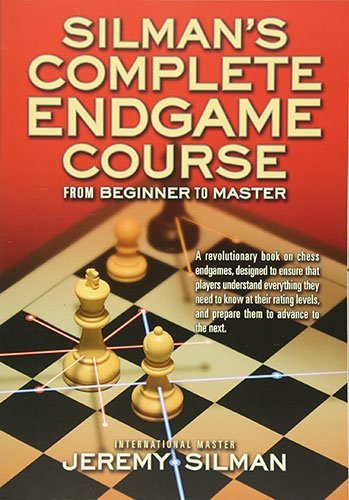
Silman’s Complete Endgame Course
Jeremy Silman (Siles Press, 2007). Organised by rating band, so you read only the section for your strength and stop. That structure is the reason it is still the usual first recommendation nearly twenty years on. The flip side is that the higher sections are thin compared with a dedicated reference, so it is a book you outgrow rather than keep.
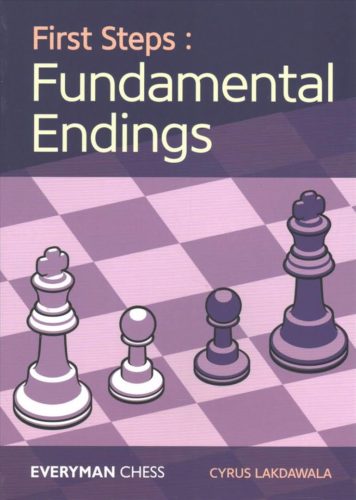
First Steps: Fundamental Endings
Keith Arkell (Everyman Chess, 2017). The same job done more briefly and more recently, with the emphasis on principles rather than exhaustive coverage. A reasonable alternative to Silman if you want something shorter, and a poor one if you want something you can look things up in.
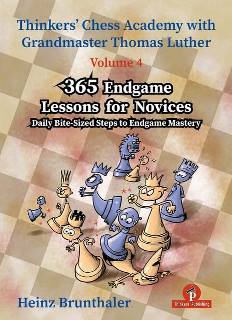
365 Endgames Lessons for Novices
Heinz Brunthaler (Thinkers Publishing, 2023). One short lesson a day for a year. The format is the point: it works if you actually do it daily and does very little if you read it in three sittings. Worth knowing this is volume 4 of the Thinkers’ Chess Academy series, not a standalone reference.
There is a 16-page sample on the product page.
The reference you keep
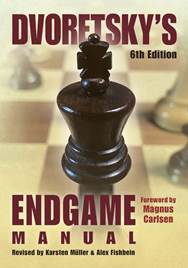
Dvoretsky’s Endgame Manual, 6th Edition
Mark Dvoretsky, revised by Karsten Müller and Alex Fishbein (Russell Enterprises, 2025). The standard work, and the sixth edition is current rather than a reprint. It is also genuinely difficult, written for a player who will work through analysis rather than read it. Buy it as a reference you will own for twenty years, not as something you will finish this winter.
There is a 15-page sample on the product page.
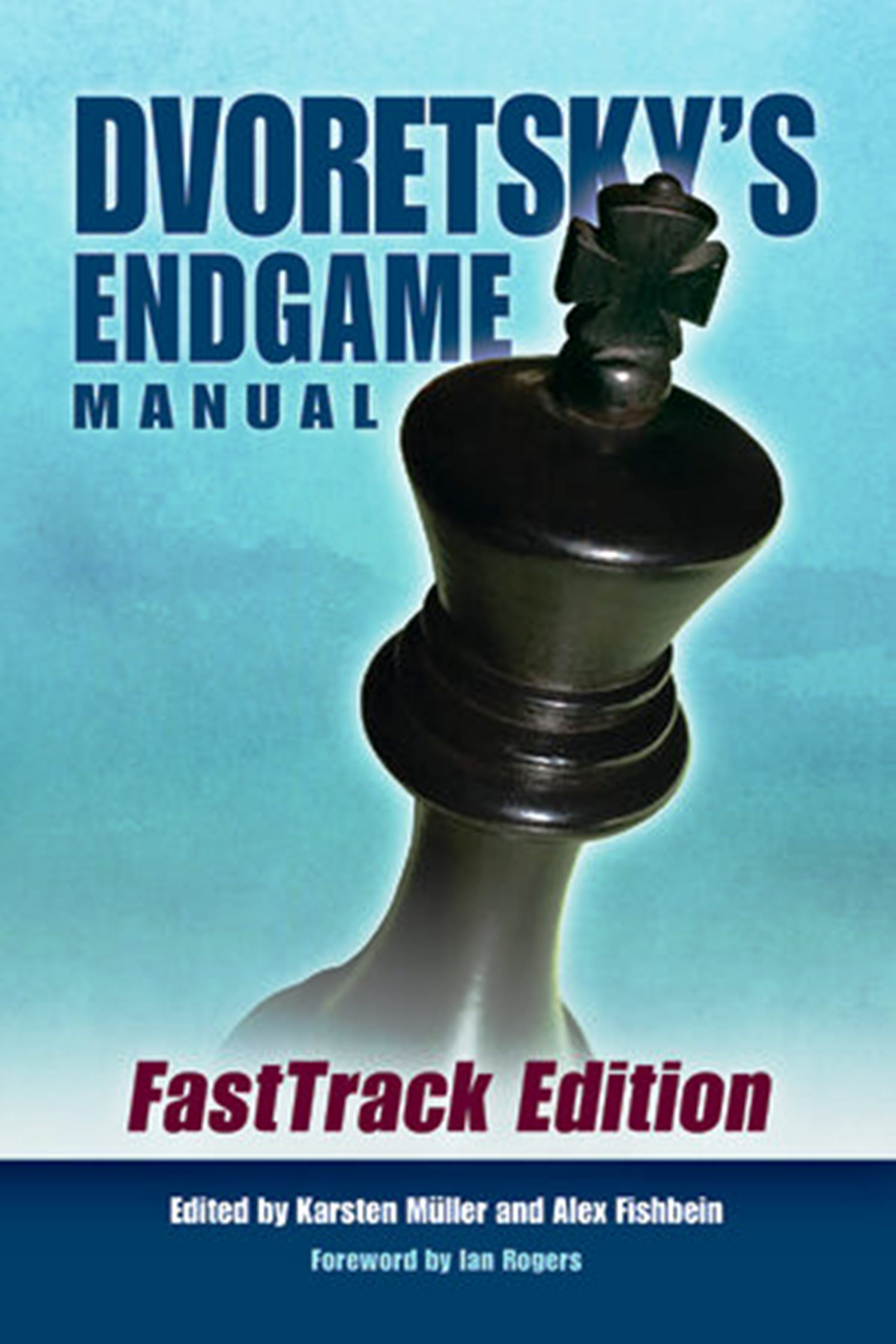
Dvoretsky’s Endgame Manual: FastTrack Edition
The abridged version (Russell Enterprises, 2021), which exists because most owners of the full manual do not get through it. It keeps the positions you cannot do without and drops the deeper analysis. Take this one if you want the content and know you will not do the work, and take the full edition if you will.
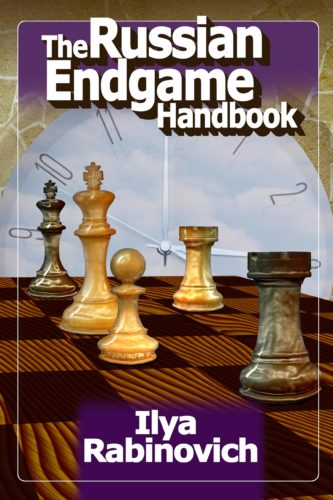
Ilya Rabinovich (Mongoose Press, 2012). A translation of the Soviet training classic, and a different tradition from Dvoretsky: more explanation of typical positions, less exhaustive analysis. Dated in places, which matters less in endgames than anywhere else in chess.
There is a 13-page sample on the product page.
Practice, rather than more reading
Reading endgame theory and being able to play endgames are different skills, and the gap between them is closed by exercises.
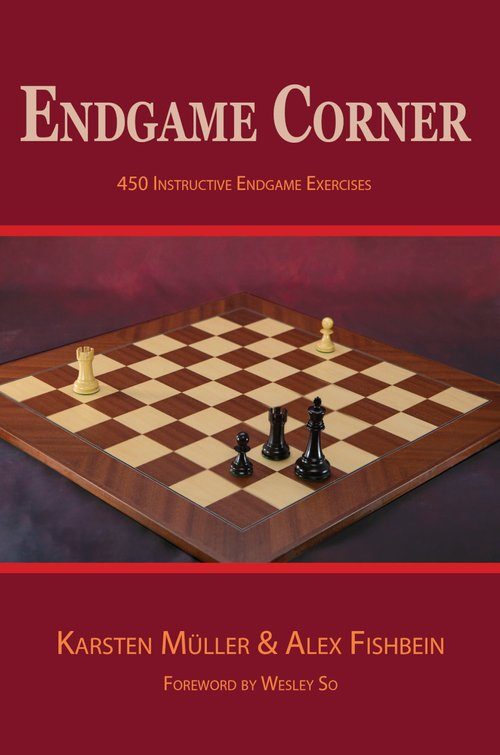
Endgame Corner: 450 Instructive Endgame Exercises
Karsten Müller (Russell Enterprises, 2023). Built to fill the gap the author identifies himself: most endgame books are either elementary or advanced, and few have enough exercises. This is the practice volume to pair with whichever reference you own.
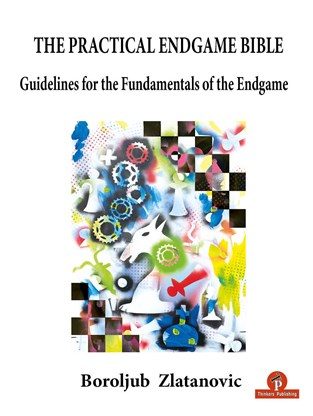
Thinkers Publishing, 2023. Guidelines for the fundamentals, aimed at the positions that actually recur rather than at completeness. Overlaps with a first endgame book, so it is a duplicate purchase if you already have Silman.
There is a 16-page sample on the product page.
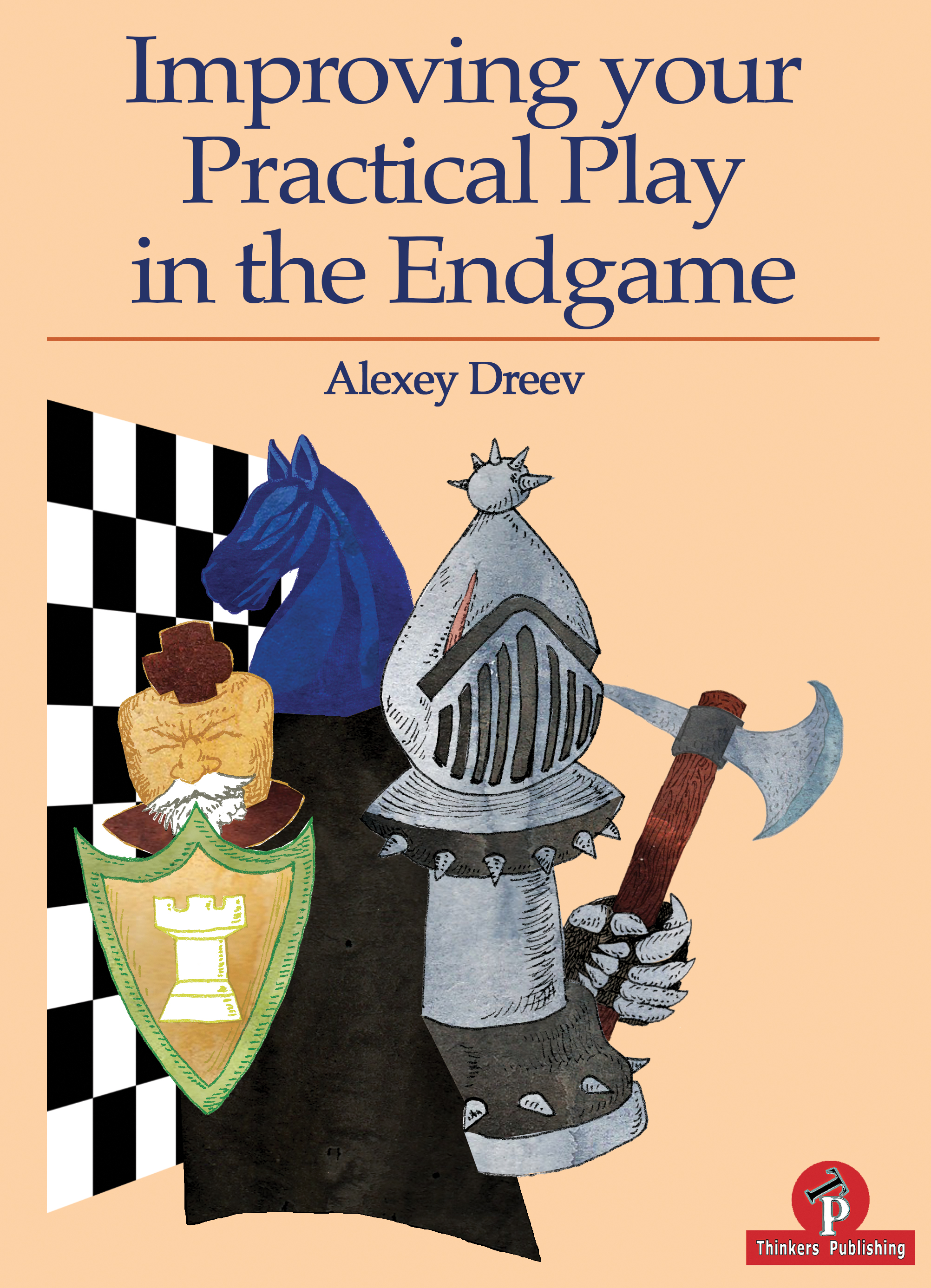
Improve Your Practical Play in the Endgame
Thinkers Publishing, 2019. Aimed squarely at evaluating and converting hard-fought practical endings, which is the specific thing club players lose points on. Assumes you already know the basic theoretical positions, so it is the second endgame book rather than the first.
There is a 16-page sample on the product page.
Rook endings, which deserve more time than they get
Rook endings are the most common ending in practical play by a wide margin, so they repay study more than any other type. Two books here, and they are not alternatives.
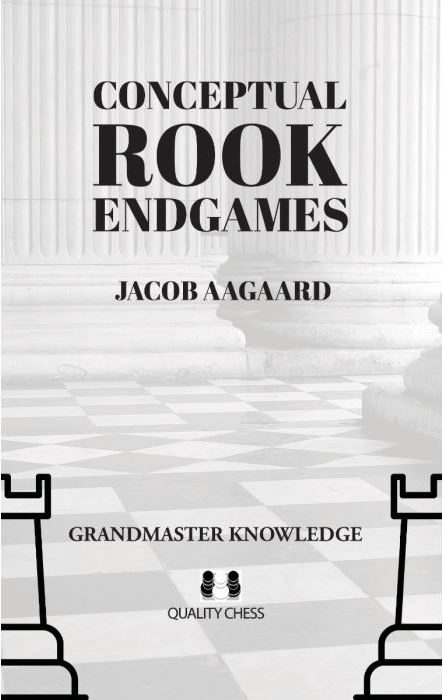
Quality Chess, 2023. Teaches rook endings by concept rather than by position, which is what makes them transferable to the board. The better starting point of the two.
There is a 16-page sample on the product page.

Your Jungle Guide to Rook Endings
Efstratios Grivas (Thinkers Publishing, 2020). Explicitly on advanced rook endings, written because the author did not want to produce another book covering the same ground as everyone else. That makes it valuable and also means it is the wrong place to start.
There is a 16-page sample on the product page.
Studies, which are a different pleasure
Endgame studies are composed positions rather than practical ones. They sharpen calculation and they are enjoyable, but they are not training for the endings you will actually reach. Buy them knowing that.
Jan Timman (New in Chess, 2025). Timman’s collected studies with the stories of how they came about, completing the trilogy that began with Timman’s Titans. As much a book to read as to solve.
There is a 16-page sample on the product page.
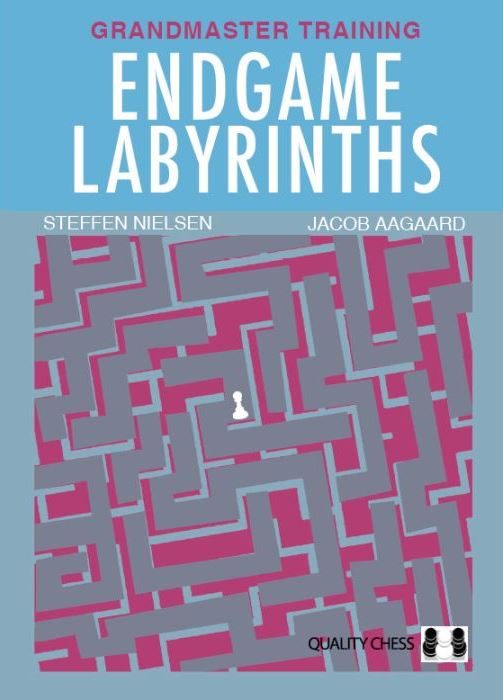
Quality Chess, 2023. 1002 studies selected and trimmed with practical usefulness in mind, which is a deliberate answer to the objection above. Grandmaster Training series, so pitched high.
There is a 16-page sample on the product page.
Where to start
If you have never studied endgames, buy Silman and read only the section for your rating. If you know the basics and keep losing drawn positions, the answer is exercises rather than another manual, so take Endgame Corner and Conceptual Rook Endgames. If you want the reference on the shelf for the next two decades, buy the sixth edition of Dvoretsky and be honest with yourself about whether you will work through it or want the FastTrack instead.